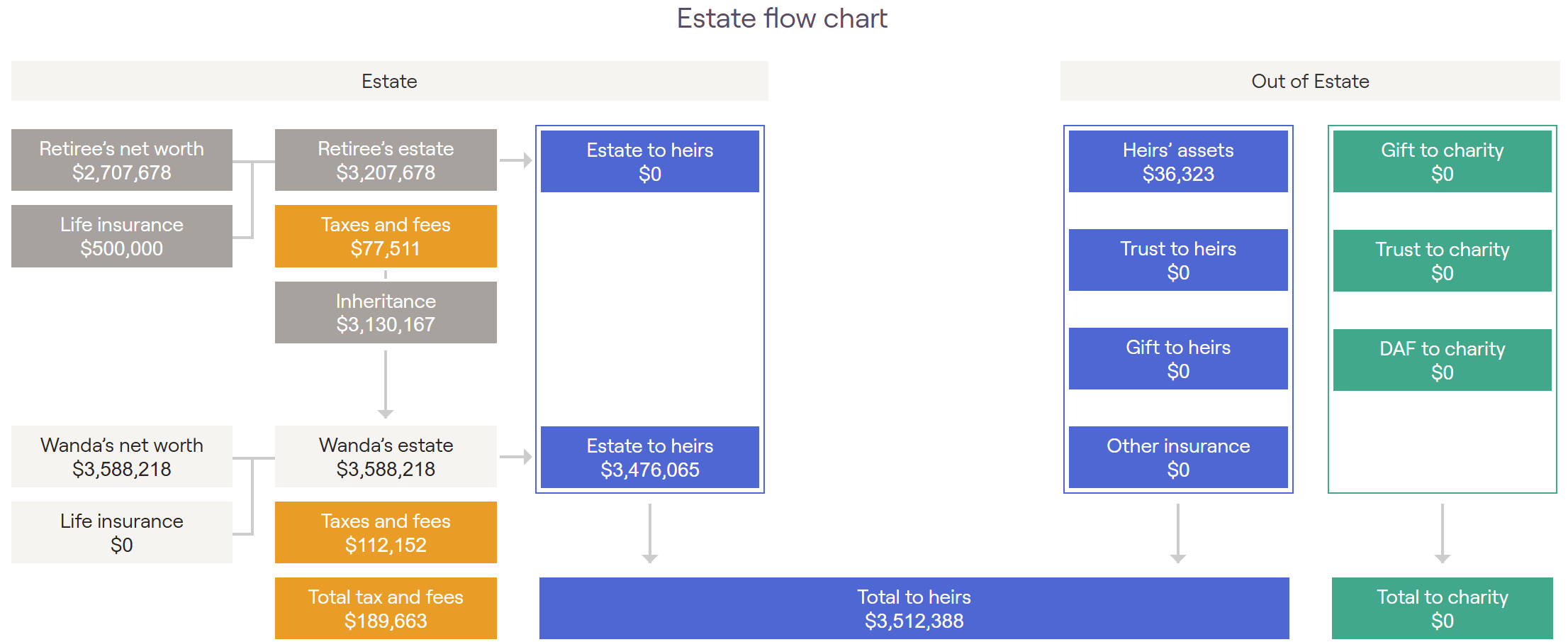
Protect your wishes, reduce complexity, and minimize taxes—without legal jargon.
We align account titling and beneficiary designations with your goals and coordinate with your estate attorney so the right assets reach the right people at the right time.
What we do (in plain English):
Review titling/beneficiaries and fix mismatches
Coordinate with your attorney on wills, trusts, POAs, and directives
Streamline charitable giving (DAFs, QCDs) and lifetime gifting plans
Coordinate inherited-account strategies with your tax/legal pros (SECURE Act aware)
Ensure liquidity for estate costs and survivor income
Who this is for
We work with families whose wills and trusts are done, but whose accounts and beneficiaries were never updated to match; high-net-worth households planning around estate-tax exposure; people who have inherited accounts and need a tax-smart distribution strategy; and anyone finalizing a divorce — the single most common moment for outdated beneficiaries to cause real harm.
Our process
Map. Every account, its titling, and its named beneficiaries — on one page.
Compare. We line the map up against your documents and your actual wishes and flag every mismatch.
Fix & coordinate. We handle the financial-account side and work with your attorney on the rest.
Re-check. Every year, and after every major life event.
Estate planning after divorce
Divorce is the moment estate plans most often fail quietly: an ex-spouse still named on a 401(k), an outdated trust, a power of attorney no one revoked. We run a full post-divorce beneficiary and titling sweep as part of settlement follow-through — so the plan on paper is the plan in force.
Frequently asked questions
Do I need a trust? Sometimes — it depends on your goals, assets, and state law. We’ll give you the financial analysis and coordinate with your attorney, who makes the legal recommendation.
What’s the most common mistake you see? Beneficiary designations that contradict the will. Retirement accounts and life insurance pass by designation, not by will — the form on file wins.
How often should I review my estate plan? Every three to five years, and immediately after marriage, divorce, a birth, a death, or a big change in the tax law.
👉 Want a quick check-up?
Get a Complimentary Estate & Beneficiary Review.
We do not provide legal advice and we are not attorneys; we partner with your counsel to implement your plan.
Estate & Legacy Planning